City
Přejít k obsahu | Přejít k hlavnímu menu | Přejít k vyhledávání
The world of international mergers and acquisitions (M&A) is often shrouded in secrecy. How does one identify suitable companies for acquisition, how long does a share transfer take, and why has ELKO EP appeared on the radar of global players?
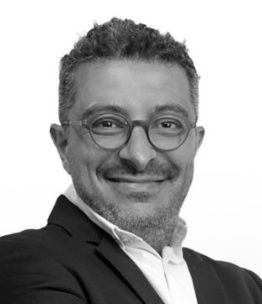
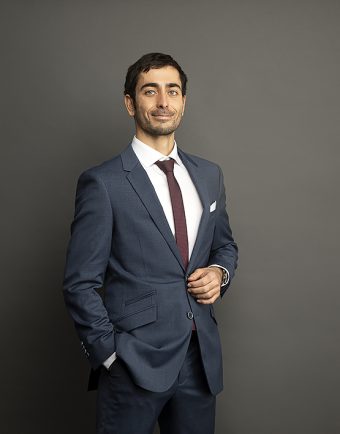
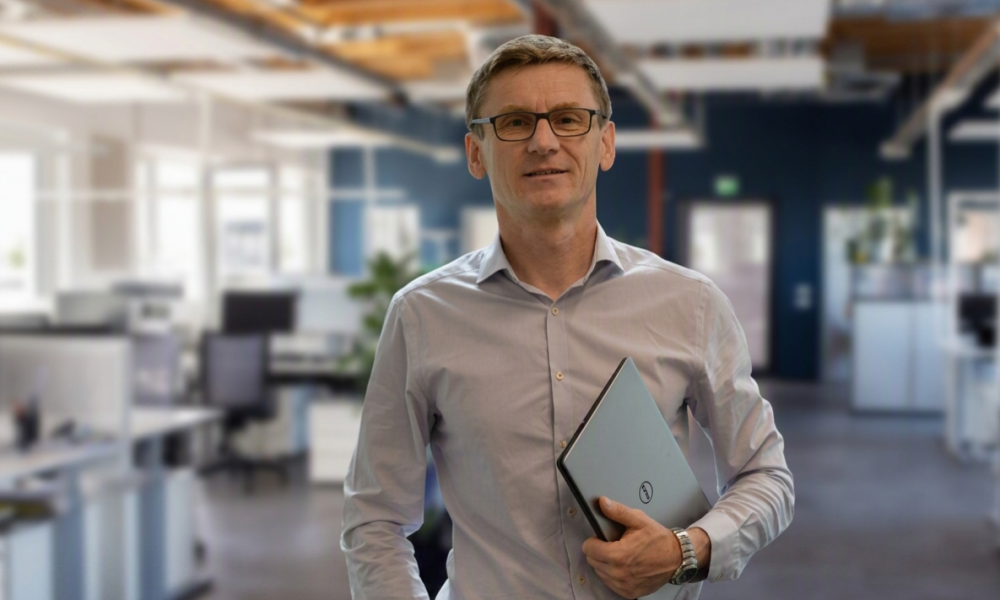
Read this candid interview with Jiří Mareš, founding partner of Merger Vision, a Prague-based M&A boutique, who currently advises ELKO EP Holding on M&A projects and serves as a member of the board of directors of its Spanish subsidiary, BJC.
Please briefly introduce Merger Vision to us.
Merger Vision is an independent M&A advisory firm focused primarily on cross-border transactions in the small and medium-sized enterprise (SME) sector. Typically, these are companies owned by their founders, families, or a group of individuals. We founded the firm in 2008 after spending eight years working at what was then the largest investment bank in the CEE region.
Do you have any preferred sectors?
We are sector agnostic. Members of our team have completed successful transactions in the traditional manufacturing sector (e.g., SOR Libchavy, Drinks Union, Palírna u Zeleného stromu, DZ Dražice, Princip, and Licon Heat), as well as in B2B services (marketing, e-commerce, and clinical trials). As part of succession planning, our clients have sold or acquired several iconic Czech brands such as Astrid, Lybar, Zlatopramen, and Stará Myslivecká.
How do you approach acquisitions, and what sets you apart from others?
Our undeniable advantage is our independence and strong connections to international M&A platforms. This allows us to work with clients over the long term. We are not under pressure to meet annual business plans, which has a positive impact on our client relationships—we never push anyone into ill-advised solutions. We also differentiate ourselves by never reaching out to potential clients just to “introduce ourselves.” We always come with a specific a opportunity or idea.
When and how did you first come into contact with Jiří Konečný and, more generally, with ELKO EP?
Our relationship with Jiří Konečný and ELKO EP is a great example of a long-term partnership that began on our initiative. Given the nature of our market focus, we were well acquainted with and closely followed the story of ELKO EP and its efforts to expand abroad. In 2020, we presented ELKO with an opportunity to acquire Grässlin, a traditional German relay manufacturer. For ELKO EP, this was an attractive opportunity to bring its products to Western markets under an established brand and to gain access to the otherwise relatively saturated German wholesale market. Since then, we have drawn ELKO EP’s attention to a number of other acquisition opportunities, not only in Western Europe, and have guided them throughout several acquisition processes. An example of a successfully completed transaction is the widely publicized acquisition of the Spanish company BJC from the Siemens Group. A few months ago, we were the preferred bidder for another Western European manufacturer with revenue of around 60 million EUR.
In the case of ELKO EP, you also have the opportunity to influence the management of certain companies within the group. How is this beneficial?
Over time, our collaboration with Jiří Konečný has intensified to such an extent that we have taken on a joint supervisory role with respect to the Spanish investment (BJC). This, of course, also includes identifying further opportunities for the strategic development of this subsidiary. In addition, a number of ELKO EP’s foreign subsidiaries have minority shareholders, so from time to time we also advise ELKO on matters related to ownership matters.
How do you identify suitable acquisition opportunities in the global market?
In our industry, this activity is called “origination.” We really enjoy it, and I consider it one of our greatest strengths. It requires a combination of excellent personal contacts abroad, structured sector-specific data on transactions, and the ability to spot, early on, which sector is currently more active than others from an M&A perspective. Access to platforms that connect companies seeking buyers with investors is also important for us, as is the ability to effectively utilize AI.
Take us behind the scenes a bit. How long does it take for a Czech company to acquire an established Spanish manufacturer?
In terms of time, I’d describe the acquisition of BJC from Siemens as an average-length transaction – it took 10 months from initial contacts to completion of the share transfer. From a purely general perspective, I would say that today’s technologies can significantly shorten the acquisition process. However, that says nothing about how long it takes to find the right partner and agree on the terms. If you’re lucky and there are highly motivated decision-makers on both sides, the transaction can be completed in a matter of months. But we’ve also had many experiences where the process of finding an investor required several years of intensive work.
What is the most complex aspect of the acquisition process? Is it finance, day-to-day management, or corporate culture?
When a strategic buyer in the industry makes a decision to acquire a company, they must be 100 percent convinced of the long-term synergies and how to realize them. They must believe that employees in both organizations will support the transaction and embrace the new strategy. The key is to motivate them effectively.
On the contrary, a financial investor must be clear from the outset about who they will sell the company to in the future and whether they will likely achieve the desired return on investment. If they are not convinced of this, they generally will not proceed with the transaction.
Securing financing for an acquisition can be a challenge when the target company is not in the best shape, but otherwise, financing is generally available and is no longer an insurmountable obstacle.
Why is ELKO EP an attractive company for other market players?
ELKO EP stands out for its ability to develop and bring cutting-edge electronics to market in an extremely short time. Its highly automated production process have made the company one of the world’s largest manufacturers of time relays. This is a business with recurring demand, attractive margins, and long-term growth. Unlike its purely hardware-focused competitors, however, ELKO EP also offers its proprietary and highly advanced solutions for smart building and home automation under the iNELS brand. A third strong pillar, offering enormous business synergy, is the company’s in-house production of switches and sockets. A sales representatives of the ELKO EP group are able to offer wholesalers and system integrators a comprehensive catalogue of products developed and manufactured in Europe – something no other competitor in the SME segment can match.
Where might the ELKO EP’s future acquisition activities be headed?
From our perspective, we are currently evaluating hardware and software solutions that would suitably complement the iNELS system as a sophisticated building management tool, with a focus on the hospitality industry. In general, we are interested in products that help optimize, measure, and control energy consumption. We are also constantly seeking new roads to foreign markets, so we continue to pursue local brands and complementary products from local manufacturers. We also seek opportunities to expand BJC’s product catalogue, and not just for the Spanish market. The growing international presence of ELKO EP naturally leads to discussions with major industry players and global investors, who have spotted the company on their radar.
What is your personal role in this entire process?
It wasn’t originally planned, but today I would – perhaps a bit immodestly – describe my role as akin to that of an in-house Head of M&A for the whole ELKO EP group. For me personally, this is an atypical, very informal model of collaboration with a client. It has naturally evolved over time. Anyone who knows Jiří Konečný is aware that this is exactly how he approaches his close business partners. I really enjoy this work, but at the same time, I see it as a huge professional commitment.
And what is your specific role at BJC Spain?
As we were successfully finalizing the acquisition, Jiří Konečný asked me if I would join him and our Spanish CEO on BJC’s three-member board of directors. Under this arrangement, I primarily focus on matters related to financial management, budgets, and M&A activities. However, this is by no means an executive management role—we have a highly experienced executive team in Spain. My primary focus remains M&A advisory through Merger Vision.